Master of Philosophy in Immersive Technologies and Video Game Studies

APU University Malaysia
Master of Philosophy in Immersive Technologies and Video Game Studies
APU University Malaysia
Free, no obligation. We'll send your exact breakdown for Master of Philosophy in Immersive Technologies and Video Game Studies on WhatsApp.
Our team is preparing your full fee breakdown for Master of Philosophy in Immersive Technologies and Video Game Studies plus any scholarships you qualify for. Tap below to open the chat and get it on WhatsApp now.
Master of Philosophy in Immersive Technologies and Video Game Studies — APU Malaysia
A research-focused MPhil preparing immersive experience designers and scholars. The programme develops advanced technical expertise in immersive technologies, innovation and idea management, and deep domain knowledge across management and computing. It also provides advanced research training and skills to pursue a PhD and roles such as Interactive Experience Designer, Advanced UX Strategist, Immersive Digital Innovation Specialist, or Immersive Technology Scholar–Practitioner.
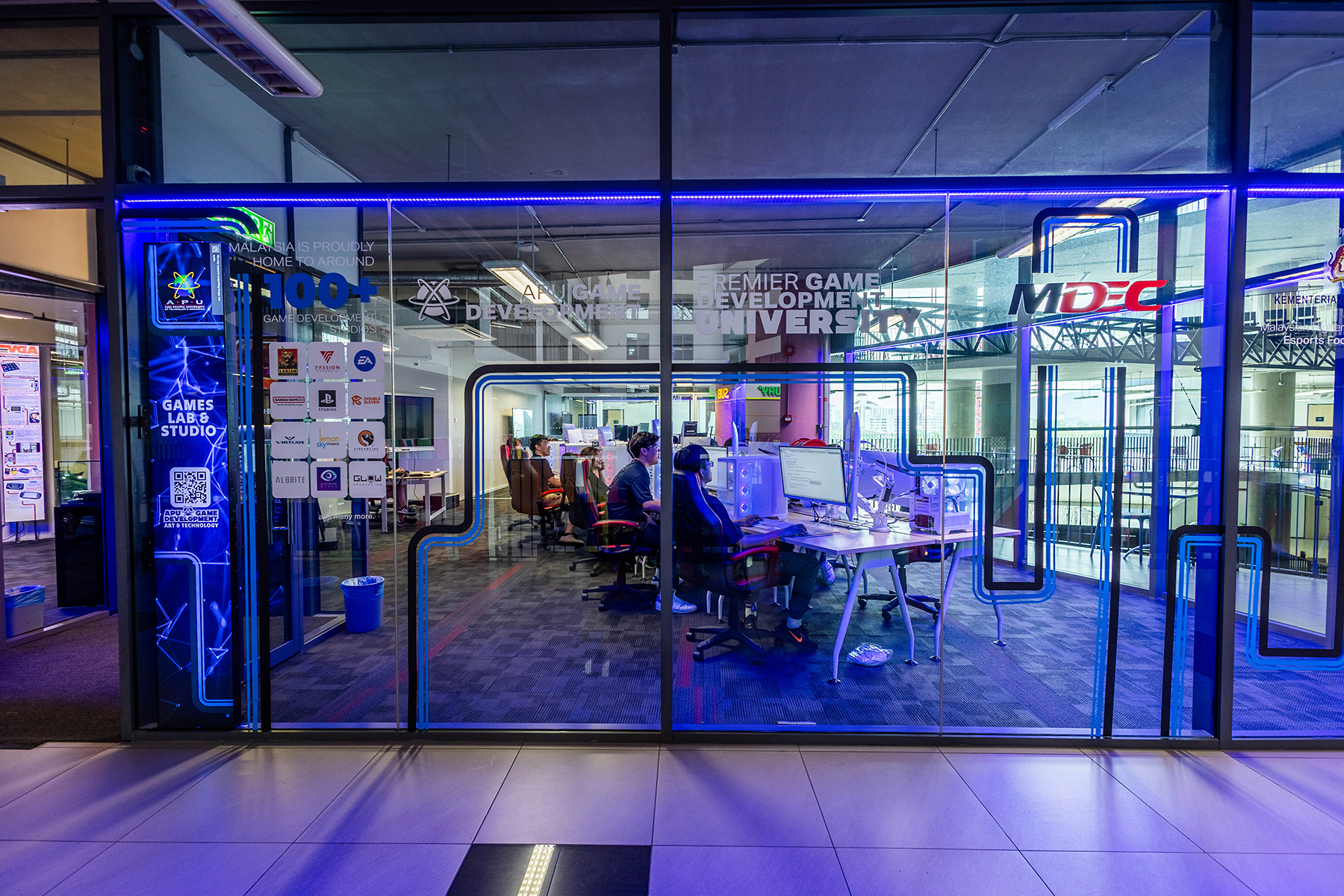
The Asia Pacific University of Technology & Innovation (APU) has launched its new Game Development Lab & Studio, built to mirror professional international studios.
The facility supports APU’s industry-focused game development programs and its role as Malaysia’s e-Sports Focus Centre (appointed by the Ministry of Higher Education).
Equipped with high-performance workstations (RTX 5070 GPUs and Intel Core Ultra CPUs), it gives students hands-on experience with industry-standard tools.
With real-world-experienced lecturers and guidance from curriculum partners like Larian Studios, graduates are prepared for careers in game development and immersive digital media.
Students enrolled in the Research Degree programme may convert to PhD candidacy if they meet all of the following criteria:
(a) Show excellent progress in their research.
(b) Demonstrate that their project can be expanded to PhD level.
(c) Pass a rigorous assessment.
Successful conversion changes the student’s status from Research Degree candidate to PhD candidate, with the candidature start date backdated to the original Research Degree registration date. This allows the student to obtain a PhD in a shorter timeframe without having to complete a separate Master’s programme.
This programme is research-led and assessed through oral presentations and written reports at several stages, including: Proposal Defence, regular half-yearly progress reviews at research colloquia, Work Completion Defence, Thesis Examination, and Viva Voce. Students are required to complete one taught module in Research Methodology to acquire the prerequisite knowledge for effective research. Regular meetings with supervisors are expected to guide the research direction and to ensure the quality and significance of the findings.
The team typically replies in a few minutes.


Let’s connect! We assist you in choosing the best course suited to your qualifications and needs at this institution. Fill in your details below for a free consultation from us.
 Your form has been submitted!
Thank you for submitting your form to us.
We will contact you as soon as possible to assist you on your university journey.